
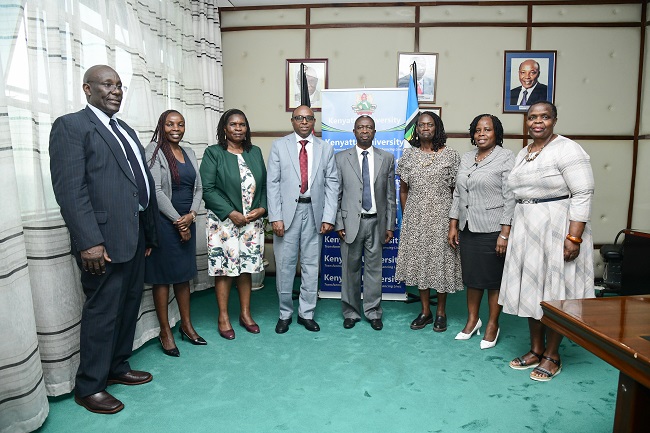
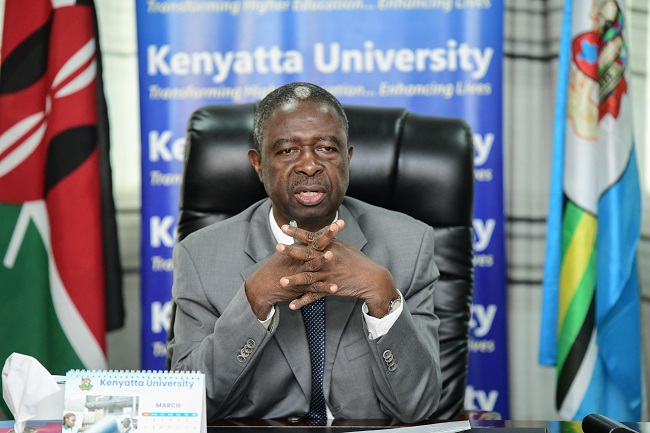
As higher education takes on an increasingly strategic role in regional development, Kenyatta University (KU) is deepening its international engagement through discussions with Amoud University, one of Somalia’s leading higher education institutions, in a strategic meeting chaired by Prof. John Okumu, Acting Vice-Chancellor.
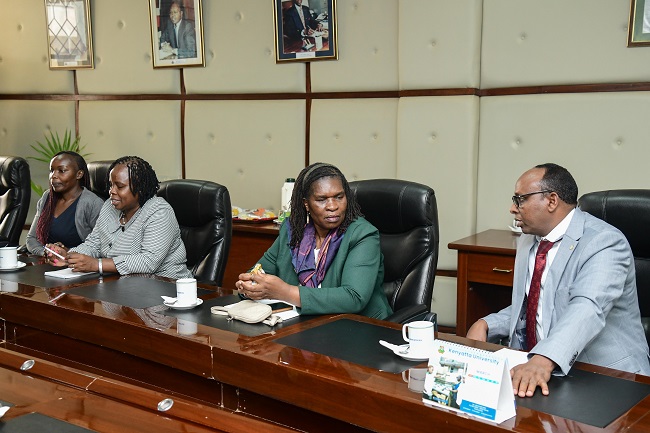
The engagement brought together senior leadership from both institutions to explore collaboration in academic programmes, research, staff and student mobility, grant development and inclusive education, with a shared focus on strengthening institutional capacity in post-conflict and rebuilding contexts.
Shared Histories, Shared Mandates
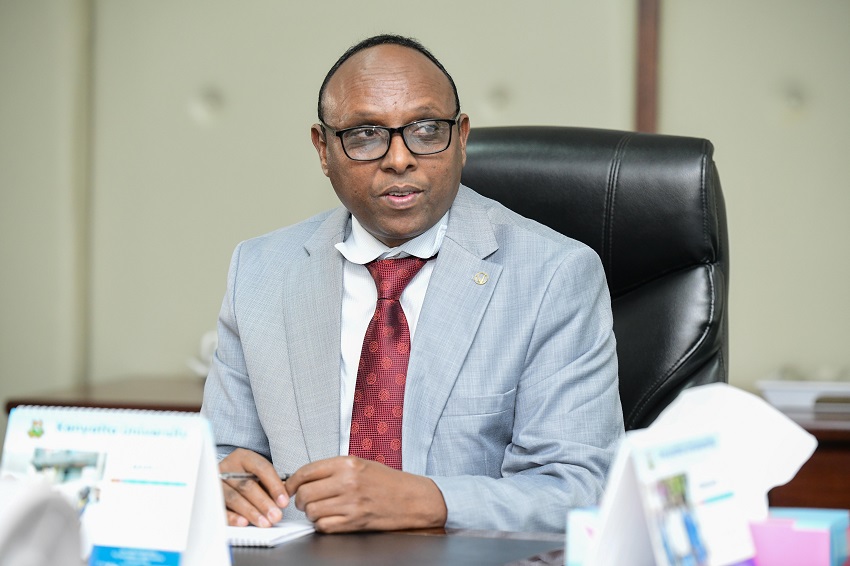
Speaking during the meeting, Prof. (Dr.) Mohamed Muse, President of Amoud University, reflected on the University’s journey from its early beginnings as a modest community-driven institution to a comprehensive university serving the wider Somali state. Established with just two faculties, Amoud University has steadily grown to host 14 faculties today, offering a broad range of academic programmes.
Uniquely, Amoud University is recognised for its open admissions model, serving Somali students across the entire state and diaspora, positioning it as a key access point for higher education in the region. The University currently employs over 300 academic staff, the majority of whom are international scholars, underscoring its global orientation despite operating within a resource-constrained environment.
Both institutions acknowledged shared challenges, including financial pressures linked to public funding models, while emphasising their common commitment to education as a tool for national development and societal rebuilding.
Areas of Strategic Collaboration
Discussions centred on concrete areas for collaboration, including:
- Joint academic programmes and curriculum development
- Collaborative research and grant writing
- Student and staff exchange initiatives
- Co-teaching and co-creation of learning programmes
- Capacity building to address shortages of full and associate professors
Amoud University highlighted a critical need for senior academic expertise across several disciplines and expressed interest in drawing on KU’s strong alumni network, whose graduates are globally distributed and contributing meaningfully across sectors. KU leadership noted the potential to strategically engage its alumni and academic staff to support teaching, mentorship and institutional development at Amoud University.
Inclusive Education and Special Needs Training
A key focus of the engagement was inclusive education and special needs training. Amoud University noted the presence of learners with special needs across multiple faculties and the challenge of accessing specialised trainers within a predominantly interdisciplinary academic structure.
KU highlighted its unique strength as home to the only Special Needs Education department in the East African region, alongside a robust Disability Services Directorate and the recently launched Hearing and Speech Excellence Centre. These facilities and programmes serve not only the University community but also the wider region, positioning KU as a continental leader in inclusive education. KU proposed the possibility of creating integrated support units, capacity-building programmes and joint grant-seeking initiatives to support special needs learners at Amoud University, extending impact beyond institutional boundaries.
Curriculum Innovation and Pedagogical Support
Addressing the evolving demands of higher education, Dr. Adelaide Bwire, Communication Technology, emphasised the need for innovation in response to competency-based curricula and emerging pedagogical approaches.
KU outlined its capacity to retool academic staff through curriculum development, pedagogy training and flexible learning models, including sandwich programmes that allow faculty to alternate between teaching, training and research. The role of ICT as a catalyst for global connectivity and implementation was highlighted, alongside proposals for public lectures and masterclasses to enhance academic exchange.
KU’s Academic Division was identified as a key driver in quality assurance, curriculum review and academic coordination, ensuring programmes meet global standards through structured oversight and peer review.
Research, Grants and Regional Impact
KU further highlighted its strong track record in grant writing and research support, with experienced staff providing technical assistance to academic teams responding to competitive calls from organisations such as UNESCO, the Gates Foundation, Erasmus Mundius, DAAD, and UN agencies.
Prof. Caroline Thoruwa, Deputy Vice-Chancellor of the Division of Research, Innovation and Outreach (RIO) noted KU’s previous continuous initiatives in supporting special needs integration in a South Sudanese university, reinforcing Kenya’s position as a regional actor in academic capacity building and cross-border knowledge transfer.
Towards a Formal Partnership
Both institutions, led by Prof. Okumu, fronted a strong interest in formalising the collaboration through the signing of a Memorandum of Understanding (MoU) to anchor joint initiatives and long-term engagement.
The discussions positioned the prospective partnership not merely as an institutional exchange but as a strategic contribution to regional stability, inclusion and human capital development, reinforcing higher education’s role in rebuilding societies and shaping resilient futures.
For Kenyatta University, the engagement further strengthens its international profile as a globally connected, impact-driven institution, committed to inclusive education, innovation and regional transformation.