
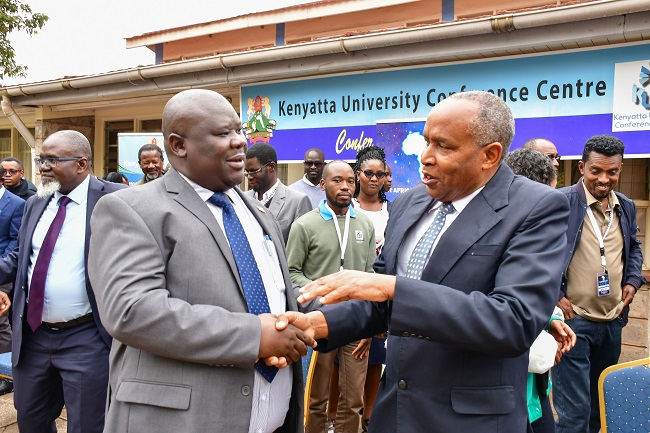
Kenyatta University has strengthened its role in advancing scientific research and regional collaboration following the opening of the East African Astronomical Society (EAAS) 2026 Workshop, held under the theme “Bridging the Gap Using Astronomy as a Driver for Regional Development.” The workshop brought together researchers, educators, students and international partners to explore the transformative role of astronomy in driving innovation, technological advancement and socio economic development across East Africa.
The engagement provided a platform for knowledge exchange, capacity building and collaboration in astronomy research and education, highlighting the growing contribution of space science to addressing contemporary challenges. Through practical training and interdisciplinary partnerships, participants are expected to gain skills that demonstrate the broader applications of astronomy beyond scientific discovery.
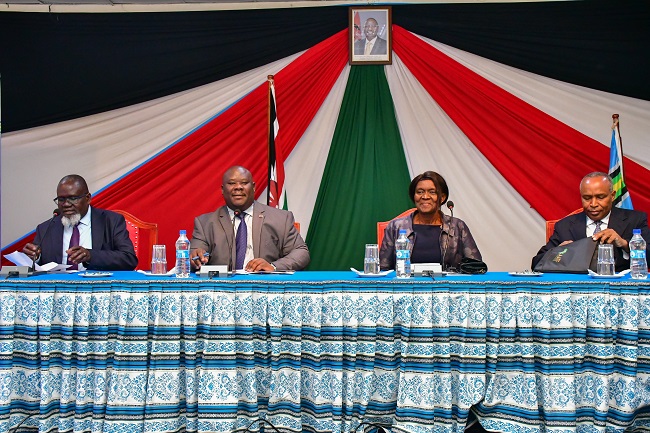
Welcoming participants on behalf of EAAS, Dr Naftali Kimani, Lecturer in the Department of Physics, highlighted the society’s role in bringing together space science enthusiasts across the region to promote research, education and collaboration. He noted that the workshop would provide participants with practical skills in Python programming, data science and innovation, enabling them to explore emerging opportunities created through the intersection of astronomy and technology.
Reflecting on the journey of EAAS, former Chairperson Prof. Paul Baki recalled that the society was founded in Nairobi in 2009 before being formally established in Cape Town in 2010. He emphasised the contribution of astronomy to areas such as data analytics, technological development and innovation, encouraging participants to apply scientific knowledge in addressing challenges within their communities. He also recognised the support of international partners in strengthening astronomy initiatives across the region.
Representing the African Astronomical Society (AfAS), President Prof. Amare Abebe highlighted the growth of the organisation from its early beginnings into a continental platform supporting astronomy outreach, research grants and teacher training. He observed that while astronomy remains one of humanity’s oldest sciences, advances in technology continue to expand its impact and applications.
International Astronomical Union (IAU) Director Dr Kevin Govender noted Africa’s growing influence in global astronomy through strategic partnerships, leadership and innovation. He challenged participants to transform scientific ideas into practical solutions that respond to societal needs while creating new opportunities for the continent.
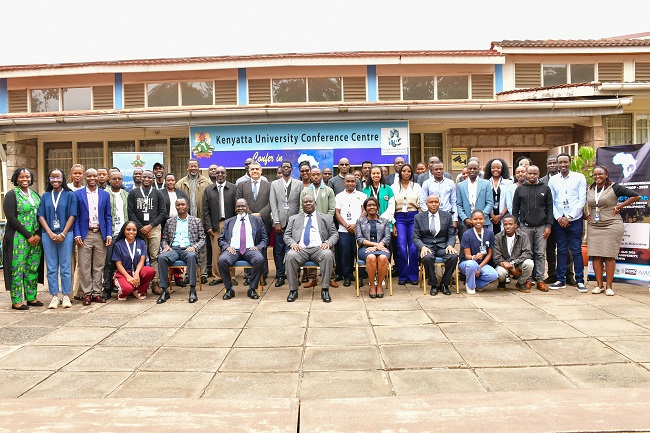
Representing VC, Prof. John Okumu, Registrar (Research, Innovation and Outreach), Prof. Paul Oyore described the workshop as an important milestone in advancing scientific collaboration and strengthening research partnerships. He reaffirmed the University’s commitment to promoting innovation, nurturing future scientists and providing platforms that encourage knowledge exchange among scholars and institutions.
The workshop reinforces Kenyatta University’s continued commitment to supporting research excellence and scientific advancement. By hosting regional and international scientific engagements, the University continues to position itself as a centre for innovation, collaboration and discovery, contributing to the growth of knowledge driven solutions for East Africa and beyond.