
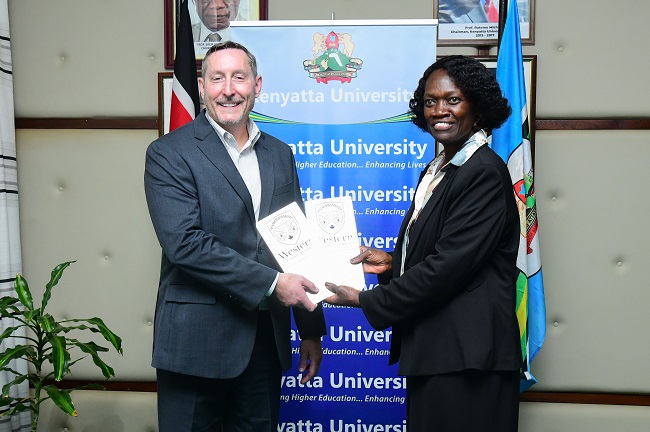
Kenyatta University is exploring strategic collaboration with Canada’s Western University in medical innovation, interdisciplinary research and emerging technologies to strengthen research capacity and advance solutions to societal challenges.
The discussions took place during a courtesy call by a Western University delegation led by Prof. Jeffrey Hutter, Acting Deputy Provost. Prof. Caroline Thoruwa, DVC Research, Innovation and Outreach, represented the Vice-Chancellor.
The delegation included Prof. Bryan Neff, Associate Vice-President at Western Research, and Dr. Margaret Mutumba, Director of the Africa Institute and the Frugal Biomedical Innovations Program. Kenyatta University was represented by Dr. Peter Kamau, Executive Dean, School of Engineering and Architecture; Dr. Eng. Ken Iloka; Dr. Veronica Ngunzi; Dr. Joseph Muguthu, Chair, Department of Energy, Gas and Petroleum Engineering; Prof. Lucy Kathuri Ogolla, Director of the Centre for International Programmes and Collaboration (CIPC); and Dr. Susan Musembi, Director of Innovation, Incubation and University Industry Linkages.
Dr. Eng. Iloka emphasised the need to advance medical innovations and translate research into practical applications. He called for a broader approach incorporating innovations across other sectors to enhance interdisciplinary collaboration.
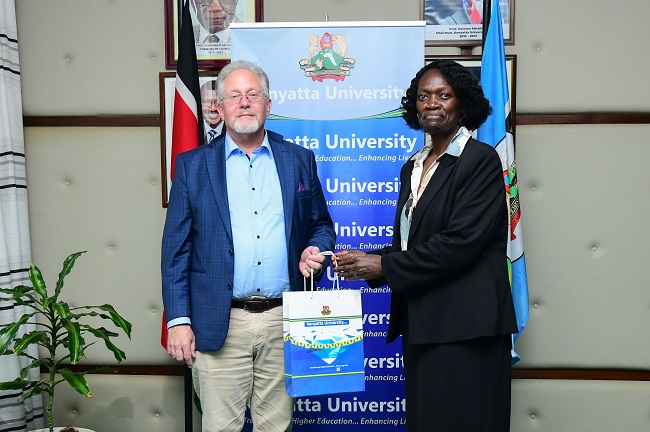
Prof. Hutter highlighted Western University’s academic capacity, comprising approximately 44,000 students, 11 faculties and more than 400 undergraduate programmes. Prof. Neff explained that the visit sought to identify synergies between the two institutions, noting that several promising areas for collaboration had already emerged.
Prof. Thoruwa welcomed the prospects for partnership, particularly opportunities involving Kenyatta University’s younger schools, which could benefit from joint research, knowledge exchange and innovation initiatives.
Dr. Mutumba noted Western University’s approximately 30 years of engagement in East Africa. She highlighted the Africa Institute’s multidisciplinary network of institutions and universities as an important platform for fostering cross-sectoral partnerships.
Discussions also explored agriculture, vaccine development, artificial intelligence (AI) and space exploration. Dr. Musembi highlighted Canada’s agricultural ecosystem and its relevance to vaccine development, while participants underscored equity in the application of AI.
The engagement provided a platform for identifying shared priorities and potential collaborative initiatives. Kenyatta University remains committed to strengthening international partnerships that advance research, innovation and academic excellence while delivering meaningful impact to society.