
Boosting Women-Led Digital Ventures
Kenyatta University (KU), through the KU-WEE Hub, has strengthened its global innovation footprint by hosting a courtesy call from Tech-Park Kaunas of Lithuania. The visit marked the formal rollout of activities under the Strengthening African Digital Entrepreneurship Ecosystems (SEADE) initiative, following the signing of a Memorandum of Understanding (MoU) between the two institutions.
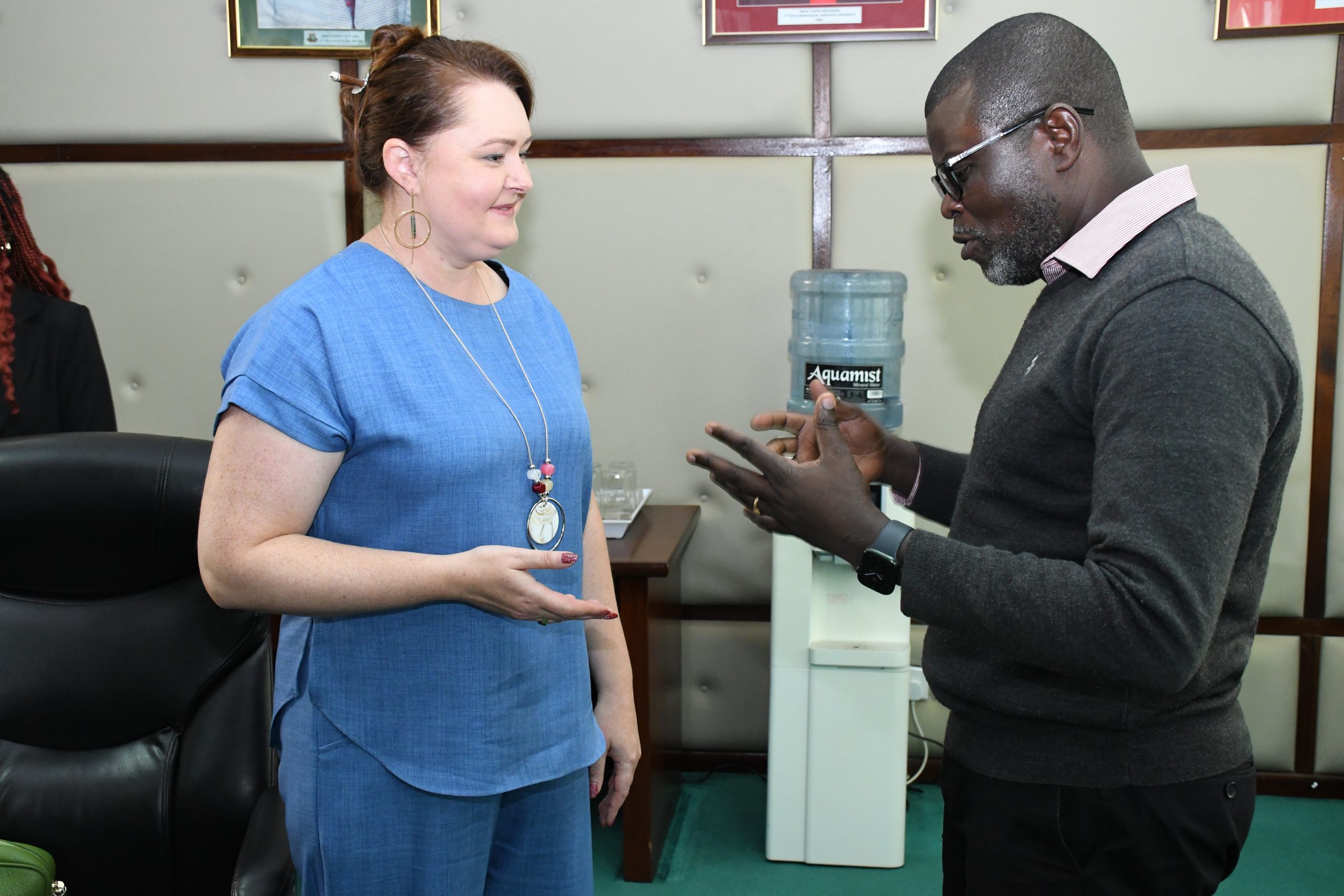
The delegation from Tech-Park Kaunas, led by Ms. Živilė Paužaitė, Head of Quality, was received by the KU Corporate Affairs team. The meeting, chaired by Prof. Richard Oduor, Registrar (Research, Innovation & Outreach), provided an opportunity to align strategic priorities, share institutional strengths, and set clear milestones for the Kenya–Lithuania collaboration.
Tech-Park Kaunas: A Leading European Innovation Hub
Tech-Park Kaunas, one of Lithuania’s premier science and technology parks, hosts over 100 deep-tech companies in fields ranging from smart cities to medtech, green tech, spacetech, and creative industries. It is a member of major international networks, including:
ESA Business Incubation Centre (ESA BIC Lithuania) – supporting space-related ventures.
CERN Business Incubation Centre – commercialising high-tech innovations.
European Business & Innovation Centre Network (EBN) – connecting over 1,000 innovation stakeholders.
NATO DIANA – fostering dual-use and defence innovation.
Its flagship programmes, Evolut 4.0 and Medaccelerator.lt, have propelled startups to global markets and earned international recognition.
SEADE: Building Bridges Between Africa and Europe
The SEADE Project, funded under the EU’s Horizon Europe programme, is a pan-African and EU initiative connecting research and innovation ecosystems in Africa and Europe, with Ghana, Kenya, Senegal, and South Africa as pilot regions. Partners include WAZIUP e.V., the ENRICH in Africa (EiA) Centre, and the Association of African Universities. The initiative promotes capacity building, women’s entrepreneurship, internationalisation, and practical, market-oriented research translation.
During the discussions, KU-WEE Hub Leader Prof. Judith Waudo outlined how the partnership will scale up existing women-focused online training into a hybrid model, integrating hands-on incubation. She noted that KU’s research data has already influenced national tourism and gender policies, and that the SEADE partnership will unlock further EU cooperation opportunities.
Partner Profiles: ENRICH in Africa Centre & WAZIUP e.V.
Ms. Melanie Mwangi, Centre Support Officer from the ENRICH in Africa (EiA) Centre, emphasised the Centre’s role as an ecosystem aggregator, “match-making” African and European innovators to build resilient partnerships. She noted that the application process for SEADE had been highly competitive, with Kenyatta University emerging as the sole Kenyan institution selected — a testament to its stature as “the Kenyan giant.”
The EiA Centre, launched in Cape Town in November 2022 and inaugurated in 2023, is a spin-off of the EiA project (2021) and continues the legacy of EU-funded programmes aimed at bridging the African and European innovation ecosystems. Its mandate is to implement the AU–EU Innovation Agenda — a 10-year policy framework designed to connect the two regions. The Centre provides services such as internationalisation support, open innovation challenges, partner matchmaking, and soft-landing assistance — all of which will be critical in scaling KU’s women-led entrepreneurship programmes.
Mr. Joseph Shitote of WAZIUP e.V. highlighted the organisation’s extensive experience in deploying affordable, open-source IoT solutions across Sub-Saharan Africa, from soil-moisture sensors and cattle GPS collars to weather stations and water-quality monitors. He underscored that WAZIUP’s innovation hubs and training programmes have already reached over 100,000 users, and that integrating these technologies into the SEADE collaboration will open new pathways for women entrepreneurs to engage in emerging fields such as AI, agri-tech, and cybersecurity.
Shared Vision and Opportunities
Speakers from both sides emphasised:
Leveraging KU’s scale – with over 70,000 students and 3,000 staff, the University offers a vast pool for research, testing, and talent development.
Joint incubation and mentorship – harnessing Tech-Park Kaunas’ expertise in business acceleration and KU’s innovation infrastructure, including the Chandaria Business Innovation Centre.
Expanding global linkages – connecting KU entrepreneurs to European markets, networks, and funding opportunities.
Inclusive innovation – ensuring women and marginalised groups are at the forefront of digital entrepreneurship growth.
Ms. Paužaitė commended KU’s serene and vibrant academic environment and expressed readiness to broker additional collaborations between KU and Lithuanian universities in agriculture, bio-economy, cybersecurity, and health technology.
The meeting concluded with a symbolic gift exchange, underscoring the spirit of community and mutual commitment. Stakeholders agreed to pursue joint fundraising, capacity-building programmes, and policy engagement, anchored in the United Nations Sustainable Development Goals, particularly SDG 17: Partnerships for the Goals.
As Prof. Oduor aptly noted, “This partnership arrives at the right moment, aligning with our performance targets and Kenya’s bottom-up transformation agenda. Together, we can co-create impactful solutions that change lives.”