

Kenyatta University (KU) has strengthened its commitment to innovation, technical skills development and industry collaboration following its recognition as a Remote Pilot Licence (RPL) training site, marking a significant milestone in a three-year partnership with Customised Aviation Solutions Limited.
The recognition, formalised through the presentation of an official Remote Pilot Licence training site certificate to the University on Friday, 6 November 2026, establishes a new platform for advancing drone technology training, research and practical applications across different sectors.
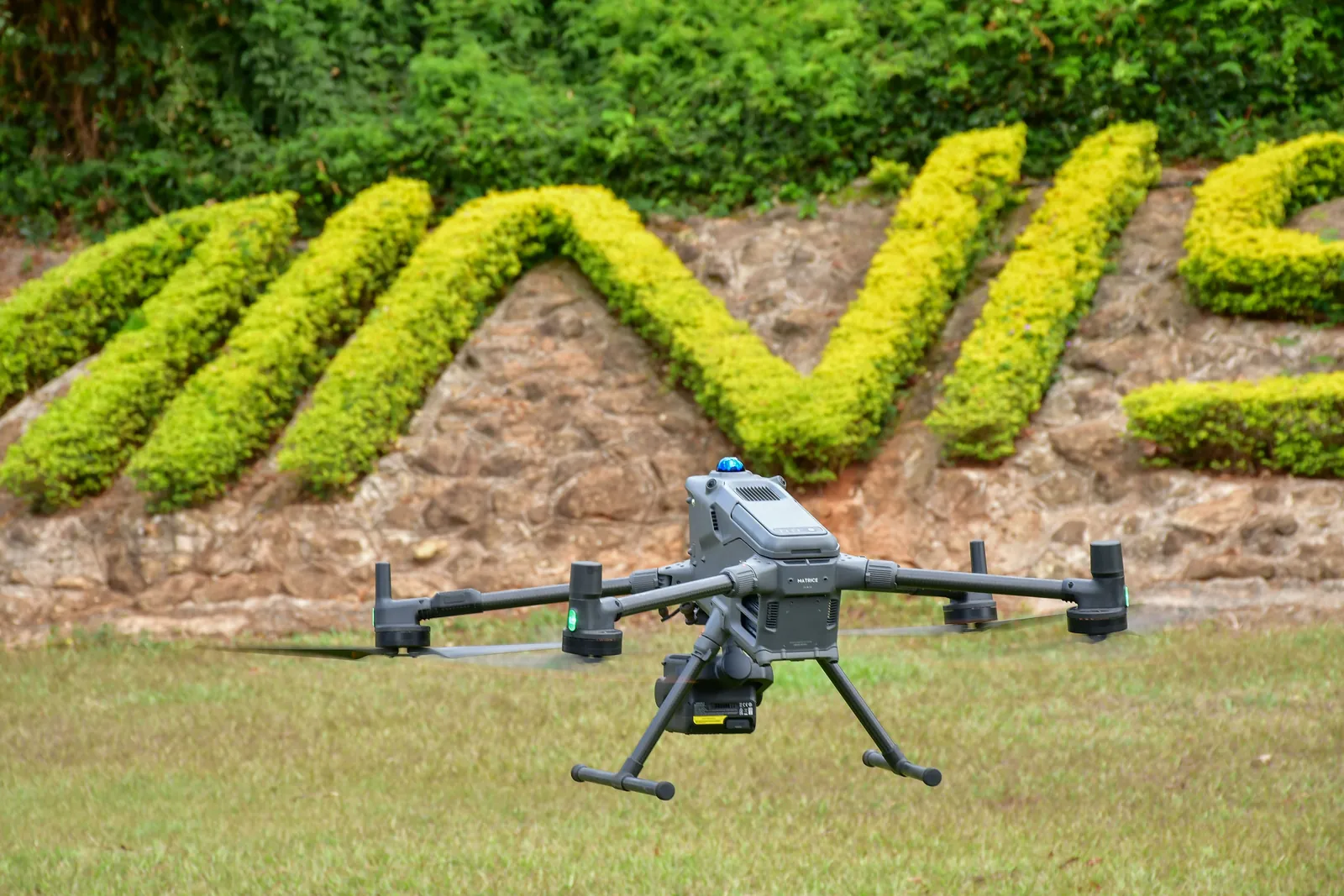
The certificate was presented by Mr. Alex Mugane, Managing Director of Customised Aviation Solutions Limited, during a courtesy call with the Vice-Chancellor, Prof. John Okumu. The engagement also featured a drone flight demonstration, showcasing the practical capabilities of remotely piloted aircraft systems and their potential applications.
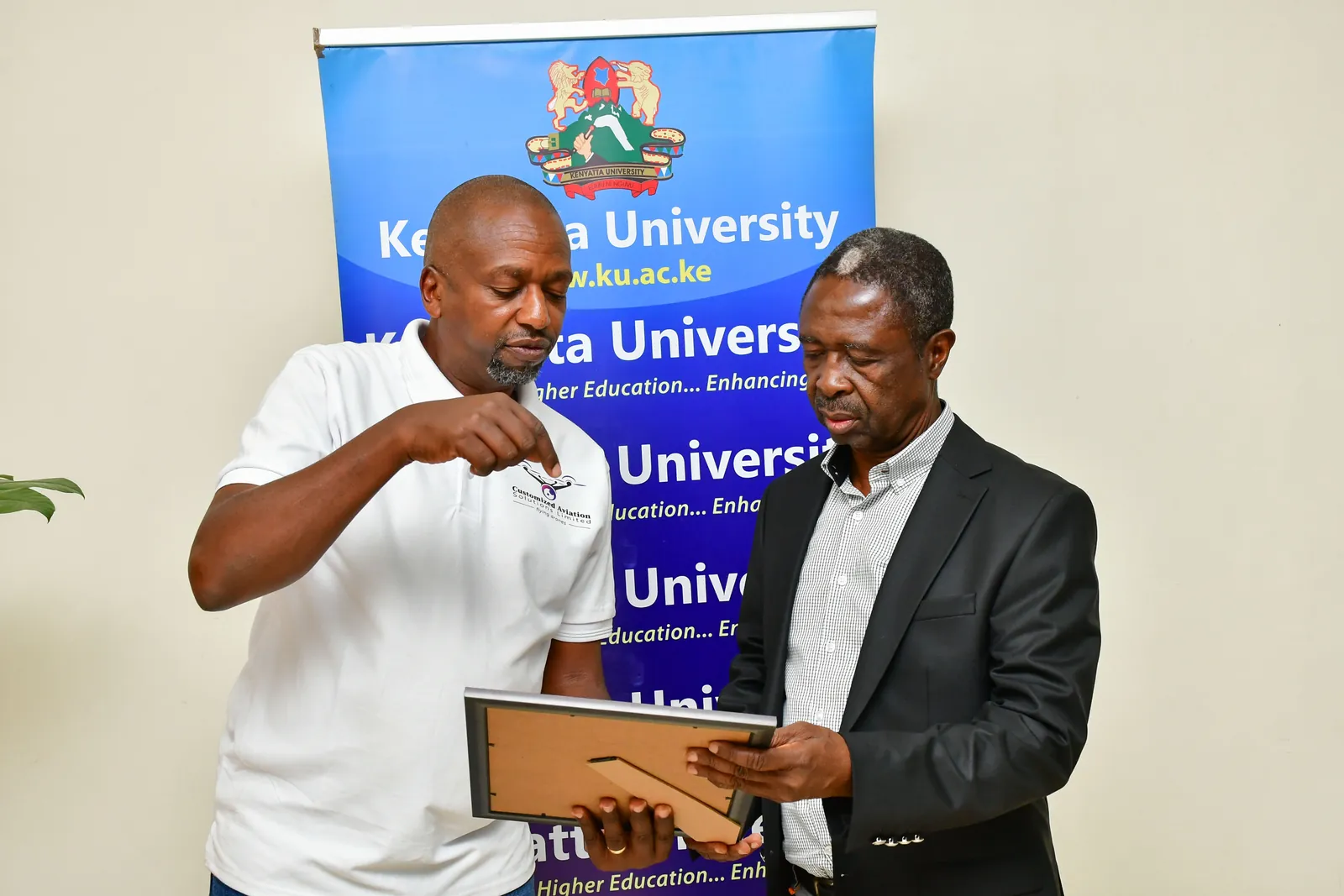
The partnership has evolved over three years, with KU becoming the first university with which the company established this particular institutional partnership. It is anchored in a shared commitment to bridging the gap between academic knowledge and industry requirements through practical training, resource-sharing and technology transfer.
Beyond the immediate recognition, the engagement positions KU to expand access to professional drone training, strengthen technical competencies among students and staff, and explore emerging opportunities in the aviation and technology industries.
Training conducted throughout the week, concluding on Friday, provided participants with practical exposure to drone operations and related technical competencies. Notably, KU students accessed the training at 30 per cent of the standard charges, reflecting the partnership's emphasis on affordability and widening access to specialised skills. The programme also forms part of a broader implementation framework supported by relevant legal instruments and operational requirements governing drone activities in Kenya.
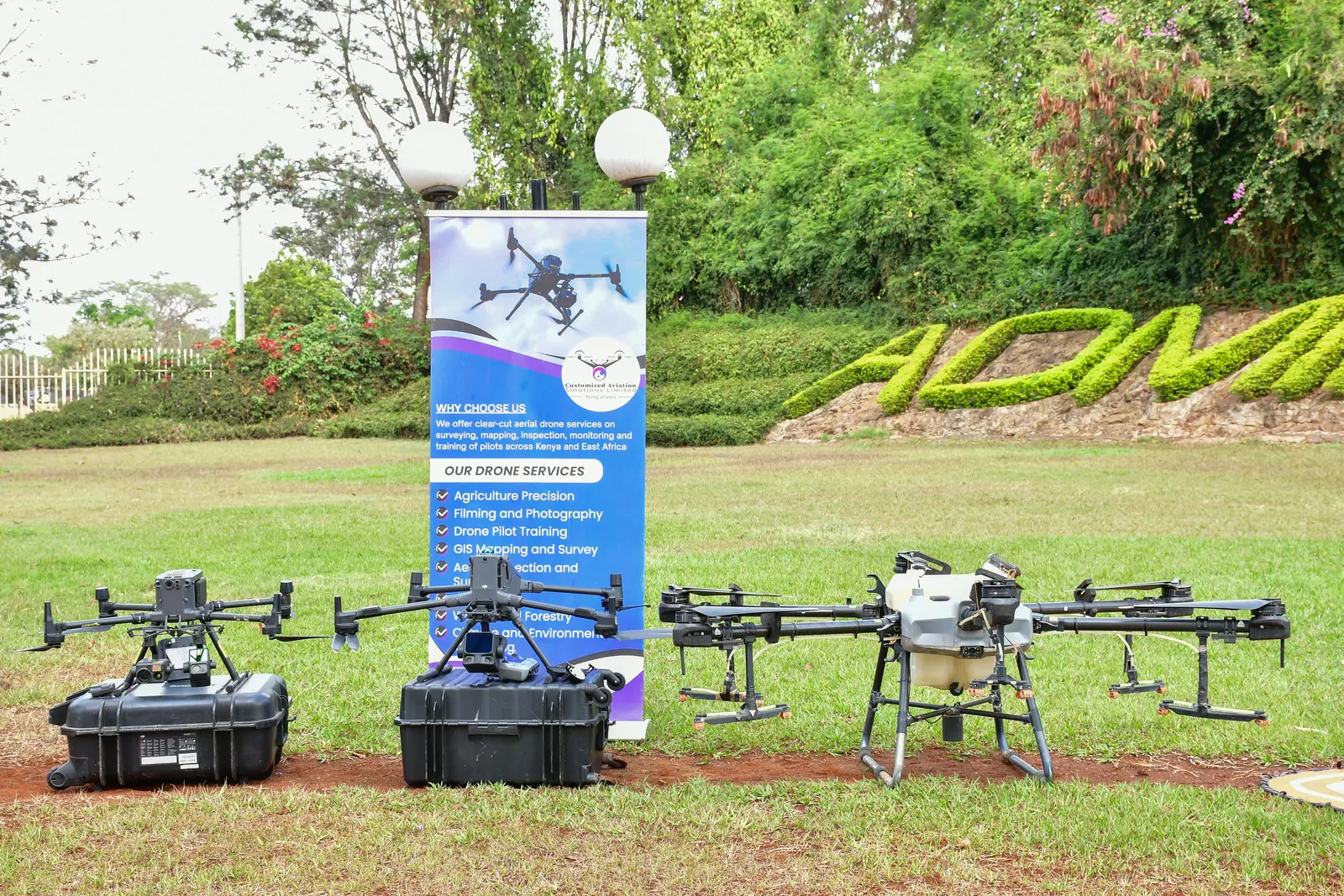
The University intends to leverage its TIKA-CEZERI LAB, equipped in August 2024, to support the partnership's training and technical activities. Plans are also underway to secure the requisite registrations and approvals to establish KU as a drone training centre, with recognition expected to extend to the University's Kitui Campus.
The opportunities extend well beyond piloting. Drone technology is increasingly relevant to agriculture, environmental conservation, wildlife monitoring, land surveying, infrastructure inspection, security, disaster management, aerial photography and mapping. Through the partnership, KU will explore the provision of technical services while developing the capacity to apply drone technology to research, innovation and practical challenges across these disciplines.
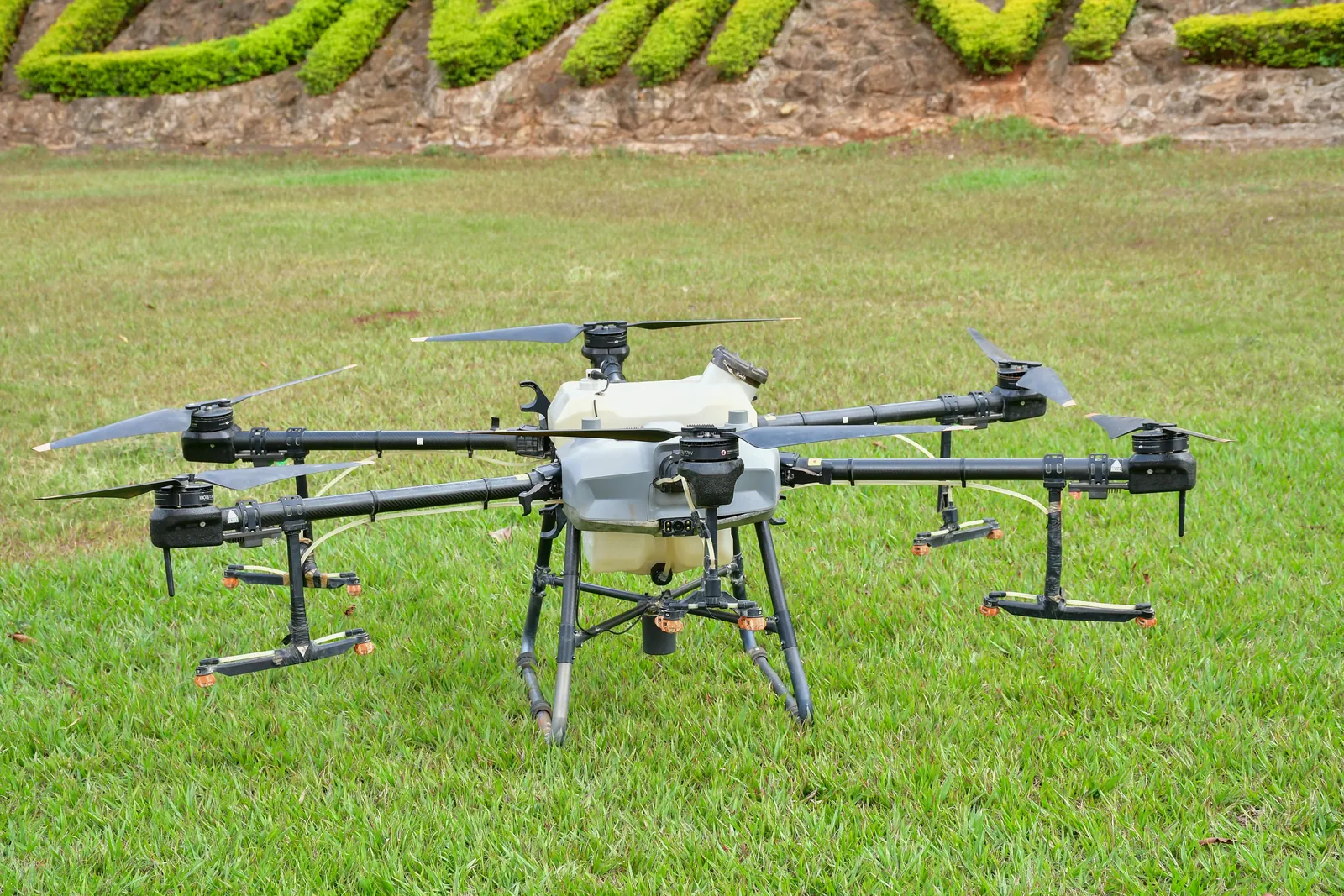
A key emerging area is the integration of Artificial Intelligence (AI) into drone operations. Combining aerial data collection with intelligent analysis can strengthen precision agriculture, environmental monitoring, infrastructure assessment and decision-making. This creates opportunities for interdisciplinary research involving engineering, agriculture, environmental sciences, information technology and other academic fields.
The collaboration also envisages the development of short professional courses targeting both staff and students, alongside research partnerships with other universities. A consortium-based approach will facilitate the sharing of expertise, equipment and institutional resources, with participating university units hosting relevant programmes independently according to their respective areas of specialisation.
In a further demonstration of the partnership's potential to connect technology with education and recreation, plans are underway to introduce drone soccer at KU in January 2027. The emerging sport combines drone piloting, teamwork, precision and technical problem-solving, offering an engaging avenue for promoting interest in aviation, science, technology, engineering and mathematics (STEM).
The partnership reflects the growing importance of public-private collaboration in higher education. By bringing together university research capabilities, industry expertise, specialised equipment and practical training, such engagements create pathways for translating innovation into market-relevant competencies, services and employment opportunities.
KU welcomes the collaboration as part of its broader commitment to strengthening university-industry linkages, promoting experiential learning and preparing graduates for an evolving world of work. As drone technology continues to advance, the University's ambition is to move beyond familiarising learners with emerging technologies to equipping them with the competencies to operate, maintain, research and innovate within them.

The milestone marks not simply the recognition of a training site but a step towards positioning KU as an active contributor to Kenya's expanding drone technology and innovation ecosystem.