
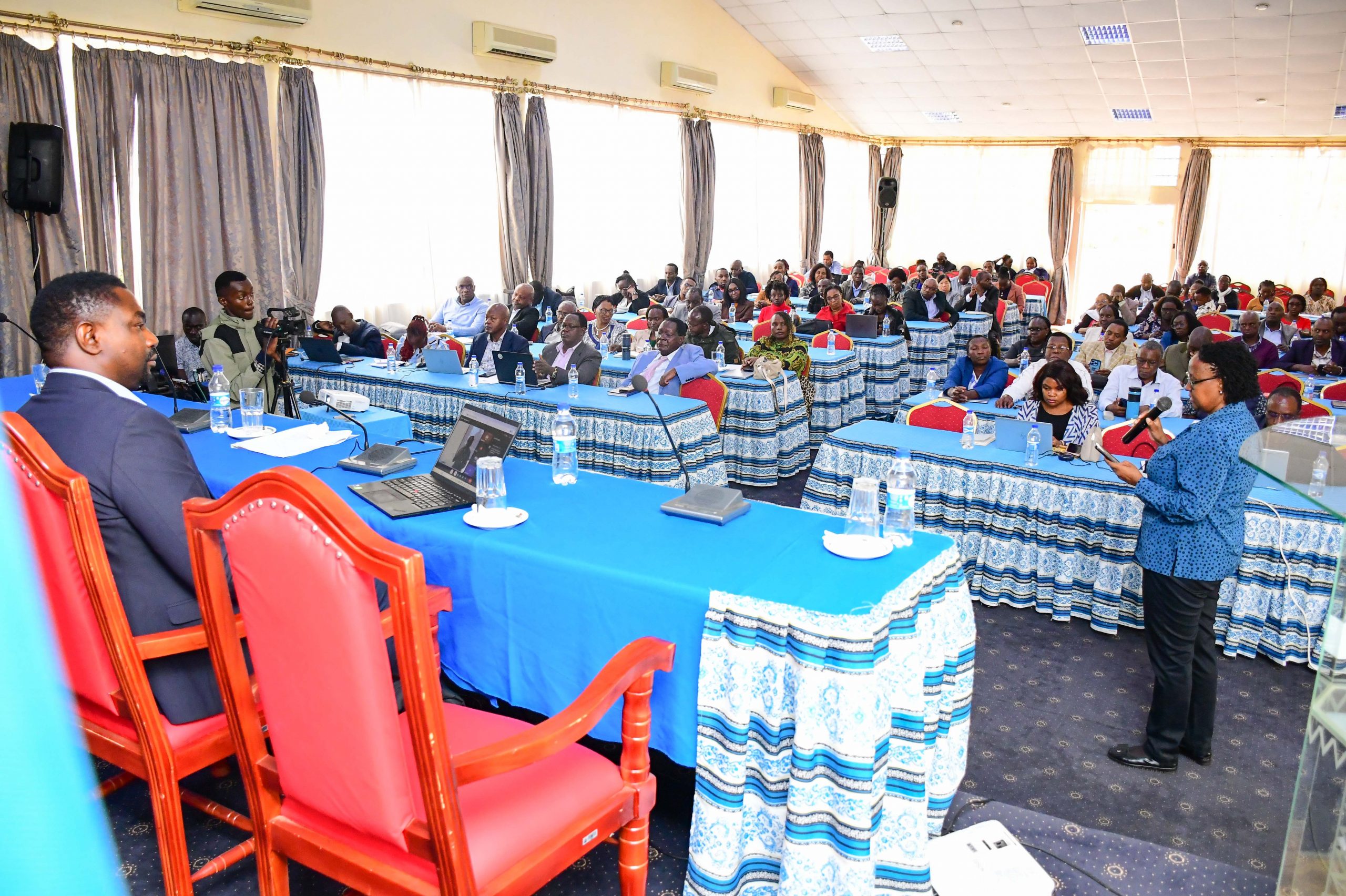
The Division of Research, Innovation and Outreach (RIO), in collaboration with Springer Nature, conducted a capacity-building workshop on Scientific Writing, Open Science, and Artificial Intelligence in Publishing. The training was delivered through a blended format, combining physical and online participation, with the physical session held at the KUCC Main Hall, Kenyatta University.
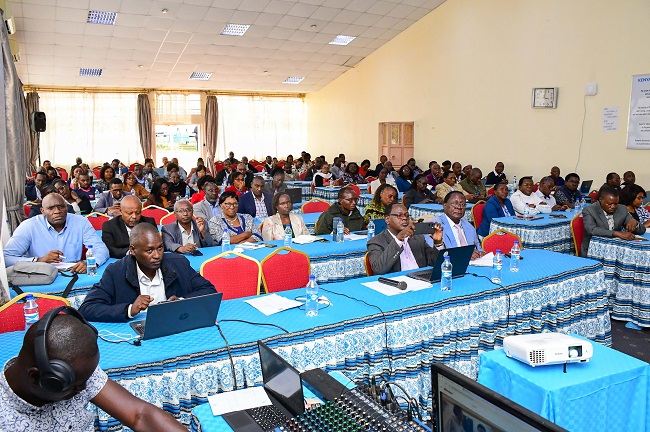
More than 250 staff members participated in the training through both the physical and online platforms, reflecting the broad institutional interest in strengthening research and scholarly publishing capacity. The workshop was graced by Prof. Caroline Thoruwa, Deputy Vice-Chancellor (Research, Innovation and Outreach), who delivered the opening remarks and underscored the importance of strengthening institutional capacity in scholarly communication, research dissemination, and academic publishing. Participants comprised School and Departmental Research, Innovation and Outreach (RIO) Coordinators, Library staff, Chief Editors and Editorial Teams of various University journals, as well as Faculty Development and Mentorship Initiative (FDMI) Mentors and Mentees. The initiative was designed to enhance participants’ knowledge and practical skills in scientific writing, scholarly publishing, open access, open science, and emerging trends in academic publishing.
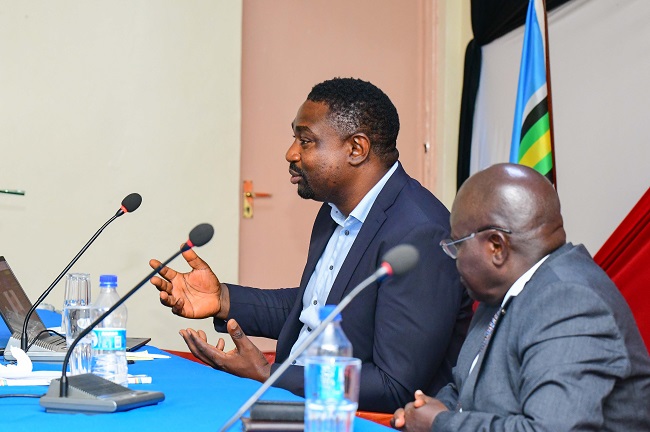
The programme featured expert presentations from Springer Nature, with Dr. Clifford Chuwah, Executive Publishing Editor, Springer Nature, participating physically and facilitating the session on Scientific Writing and Publishing: An Author Workshop. Vuyo Mliswa, Academic Affairs Manager, Africa Region, Springer Nature, participated virtually and presented on Open Access and Open Science, while Dr. Ali Saad, Publishing Editor, Springer Nature, also participated virtually and delivered a session on Redefining Scientific Publishing in the Age of Artificial Intelligence. The blended engagement provided staff with an opportunity to interact with leading publishing experts both physically and virtually, while gaining practical insights into contemporary scholarly publishing practices, open science, and the responsible application of artificial intelligence in research and academic publishing.
The capacity-building initiative is significant to Kenyatta University’s research and innovation agenda as it contributes to strengthening institutional capacity in research communication, scholarly publishing, and knowledge dissemination. By equipping academic staff, researchers, editors, librarians, RIO Coordinators, and FDMI Mentors and Mentees with current knowledge and practical skills, the training supports the production, quality, visibility, discoverability, and dissemination of the University’s research outputs. It also provides participants with insights into international scholarly publishing standards, open science practices, emerging publishing trends, and the evolving role of artificial intelligence in academic publishing.
The engagement further contributes to strengthening the University’s research ecosystem and enhancing its academic and global visibility. Through exposure to Springer Nature’s publishing expertise, participants gained insights that can support the development of high-quality scholarly publications, stronger University journals, improved research dissemination, and greater uptake of research findings. In the long term, such capacity-building initiatives are expected to contribute to a stronger institutional culture of research excellence, integrity, innovation, collaboration, and knowledge sharing, in line with the University’s commitment to advancing impactful research and scholarly engagement.