

NAIROBI, Kenya, July 22, 2026, Kenyatta University is hosting the //kood/Nairobi Selection Sprint, a three-week, free and full-time admissions programme giving Kenyans from diverse backgrounds an opportunity to pursue technology careers without requiring prior coding experience or a university degree.
The Selection Sprint, which began on 20 July 2026 at Kenyatta University, brings together about 80 participants competing for places in the first full //kood/Nairobi cohort, scheduled to begin in September 2026.
Founded in Jõhvi, Estonia, in 2021, //kood is a technology school operated by the non-profit MTÜ Tuleviku Tehnoloogiaharidus. The school has expanded its model beyond Estonia to Finland, Ukraine, Moldova and now Kenya. More than 2,500 people have learned through //kood, with over 500 graduates now working in more than 160 technology companies.
Creating More Pathways into Technology
The //kood/Nairobi initiative responds to Kenya’s growing demand for digital skills and seeks to broaden access to technology education beyond traditional computer science pathways.

Hosted at Kenyatta University’s School of Education and Lifelong Learning, the programme is designed to welcome motivated individuals regardless of their academic or professional background.
More than 800 people have registered through the //kood/Nairobi website, with women accounting for approximately 35 per cent of registrations. The average age of registrants is 23, while around 40 per cent have no previous programming experience.
Applicants come from a wide range of fields, including software engineering, information technology, business, education, agriculture, healthcare and the arts.
The diversity of applicants reflects the programme’s core philosophy that technology education should be accessible to people who demonstrate curiosity, commitment and a willingness to learn.
“Kenyatta University has always believed that learning is lifelong and belongs to everyone. Hosting kood/Nairobi at the School of Education and Lifelong Learning means a nurse, a teacher or a shopkeeper can walk in with curiosity and walk out as an engineer,” said Prof. Samson R. Ondigi, Dean, School of Education and Lifelong Learning, Kenyatta University.
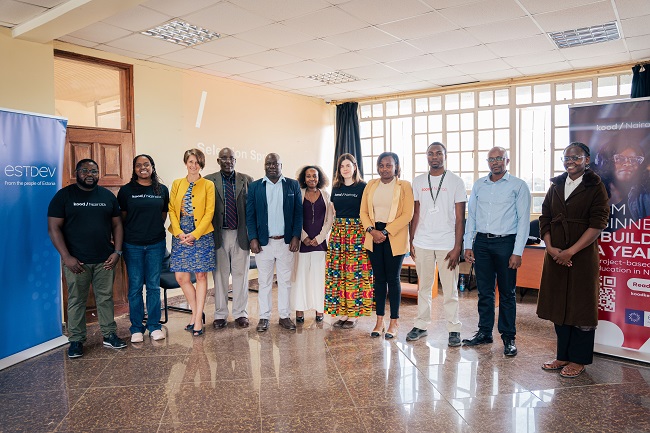
Supported by Estonia’s Development Cooperation
The programme is supported by the Estonian Centre for International Development Cooperation (ESTDEV), which is funding approximately 50 learner places in the first cohort as part of Estonia’s development cooperation with Kenya.
According to Olga Bogdanova, Regional Adviser for Africa at ESTDEV, the initiative reflects Estonia’s focus on investing in people and building meaningful connections between communities.
“Their proven educational model is a great match for Kenya’s vibrant community of young people. With their creativity, ambition, unstoppable energy and newly acquired skills, //kood graduates not only find jobs in Kenya, they can create them,” she said.
Bogdanova also highlighted the importance of cultural understanding, meaningful connections and the confidence learners gain through exposure to a new learning environment.
Learning by Doing
Unlike conventional programmes that rely primarily on lectures, //kood uses a peer-learning and project-based approach. Participants learn by building real projects, working in teams and reviewing each other’s work through the school’s cloud-based learning platform.

The three-week Selection Sprint gives prospective learners an opportunity to experience this approach firsthand while allowing //kood to identify candidates for the 12-month programme.
The first full cohort will train AI-ready product engineers, beginning with coding fundamentals and back-end development before progressing to full-stack product development, real-time applications, multi-service platforms, payments and AI-native products incorporating large language models.
The programme will be delivered through a hybrid model, with learners able to study on-site at Kenyatta University or remotely.
Upon completion, graduates will be prepared for entry-level roles in areas such as software engineering, product engineering and AI engineering, while also gaining skills that can support entrepreneurship and the development of their own technology products.
Building on a Successful Kenyan Pilot
The Nairobi expansion builds on a successful 2025 pilot, during which 12 Kenyan learners joined //kood and studied alongside Estonian students.
Learners from the pilot described the experience as demanding but transformative, particularly because of its emphasis on practical projects, peer collaboration and problem-solving.
One former learner, Jerry, secured a junior developer role during the programme and highlighted the value of working with peers from different countries.
Another learner, Rozie, captured the philosophy behind the model simply: “I think the best way of learning is just learning by doing.”
From Selection Sprint to First Cohort
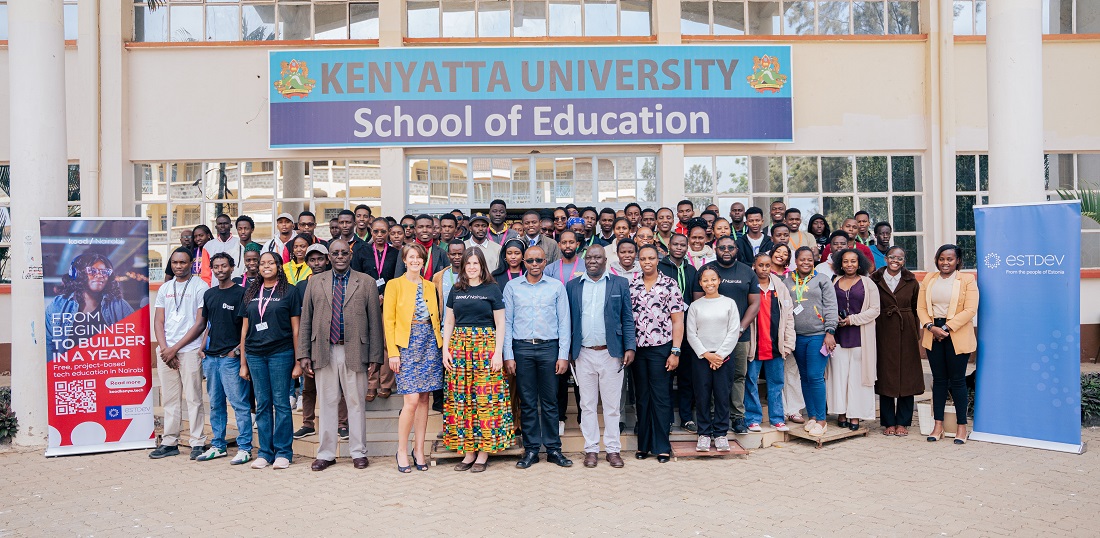
The current Selection Sprint runs from 20 July to 7 August 2026 at Kenyatta University. Successful candidates will join the first full //kood/Nairobi cohort in September 2026, with the 12-month programme scheduled to conclude in October 2027.
The initiative marks a significant step in strengthening Kenya-Estonia cooperation in digital skills development while creating new pathways for Kenyans seeking to enter the technology sector.
For Kenyatta University, hosting //kood/Nairobi further reinforces its commitment to lifelong learning, inclusive access to education and equipping learners with skills relevant to a rapidly changing digital economy.
About //kood
//kood is a technology school founded in Jõhvi, Estonia, in 2021 and operated by the non-profit MTÜ Tuleviku Tehnoloogiaharidus. It currently operates in Estonia, Finland, Ukraine, Moldova and Kenya. More than 2,500 people have learned through //kood, with over 500 graduates working in more than 160 technology companies.
In 2025, //kood was recognised by Estonia’s Ministry of Economic Affairs and Communications for its contribution to growing entrepreneurship.
The Kenyan initiative is supported by ESTDEV, with the first cohort receiving funding for approximately 50 learner places.
Media contact
Mari-Liis Kitter
Co-founder, //kood
mariliis@kood.tech
koodkenya.tech