
Today, on August 19, 2026, Kenyatta University hosted a distinguished guest lecture with Dr. Sambo Ouedraogo, a Senior Lecturer at Université Norbert Zongo (UNZ) in Burkina Faso. The event, which was held in a hybrid format at the BZ 7 facility and also broadcast online, centered on the main theme: “Opportunities for Collaboration between Université Norbert Zongo and Kenyatta University.”
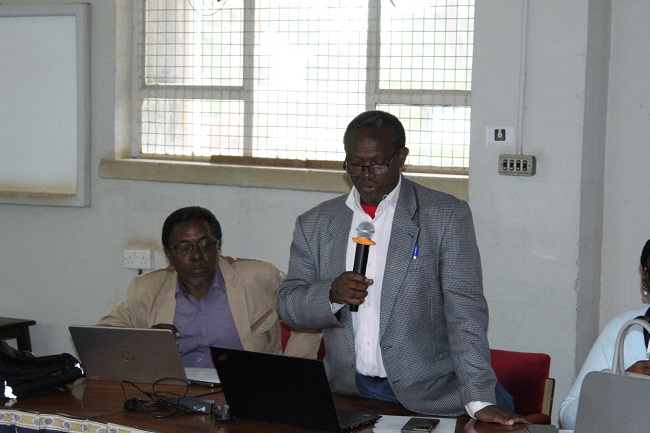
The session was initiated by Dr. Emily Wabuyele and moderated by Dr. Paul K. Muoria. The Department of Plant Sciences Chairman gave the opening remarks and this was followed by an institutional overview by Prof. Paul Kamau Mbugua. He spoke about the current teaching frameworks, ongoing research projects and specific areas of expertise in the department. It was followed by the keynote address of Dr. Sambo Ouedraogo who gave the profile of the Center Universitaire de Manga and laid out clear paths for bilateral alignment of the two academic centers.
Knowledge of the Academic Structure of Burkina Faso & Profile of UNZ
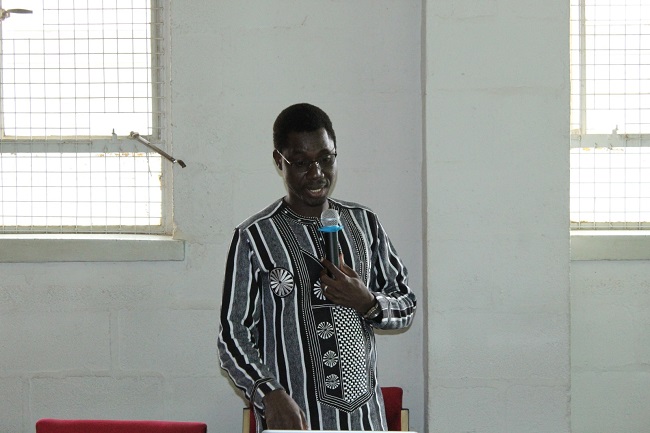
Dr Ouedraogo opened the presentation by providing structural context on the higher education sector in Burkina Faso which is made up of 5 national universities, 6 university centers (CU), 2 specialized higher training colleges (EPO and ENS) and 4 comprehensive generalist universities, with Université Norbert Zongo occupying a prominent position.
NINE CORE ACADEMIC & RESEARCH DOMAINS AT UNZ
• Human Health Sciences (SDSH): Medical, biomedical, and public health research.
• Veterinary Sciences and Medicine (SMV): Animal health, livestock production, and zoonotic disease management.
• Science and Technology (ST): Foundational and applied physical/natural scientific research.
• Legal, Political & Administrative Sciences (SJPA): Law, public policy, and institutional governance.
• Economics & Management Sciences (SEG): Economic policy, financial systems, and management.
• Human & Social Sciences (SHS): Societal development, humanities, and social dynamics.
• Arts, Languages & Literature (LLA): Cultural studies, linguistics, and cross-cultural communication.
• Agricultural Sciences (SA): Sustainable agronomy, soil preservation, and food production.
• Education & Training Sciences (SEF): Pedagogical research, teacher training, and curriculum design.
The Manga University Center has a dedicated team of 36 permanent teaching and research faculty and provides specialized programs tailored to the development priorities of the Nazinon region:
- Undergraduate Level: Bachelor’s degrees in Agrosylvopastoralism (including Food Science & Technology, and Horticulture) and in Sociology & Anthropology.
- Postgraduate & Specialized Training: Advanced training in Socio-Anthropology (social/cultural anthropology, rural studies, heritage, gender and development), Agro-Sylvo-Pastoralism (agroforestry, sustainable land management, climate adaptation), Tropical Horticulture & Green Technologies (fruit growing, floriculture, biotechnology), and Aquaculture & Sustainable Fisheries.
Strategic pillars of institutional collaboration
Building on ongoing empirical research at the Plant Biology and Ecology Lab (LaBEV) on plant biodiversity, ethnobotany, agroforestry, protected area dynamics and local species valorization, Dr. Ouedraogo identified three strategic pillars for joint engagement with KU’s Department of Plant Sciences:
Pillar I: Collaborative Research and Joint Scientific Publications: Establish strong cross-border research programs between Burkina Faso and Kenya to produce high-impact, peer-reviewed scientific papers. The main thematic areas are plant biodiversity conservation, agroforestry systems, non-timber forest products, valorization of medicinal and cosmetic plant species, and assessment of ecosystem services and evaluation of climate change impacts on fragile plant habitats.
Pillar II: Training, Mobility and Institutional Capacity Building: Encouraging world academic exchange by offering short-term scientific research stays for teachers working together to supervise Masters and PhD students and holding joint technical workshops on data analysis methods, GIS and remote sensing uses in botany analyzing plant resources in labs and writing scientific papers.
Pillar III: Joint Project Development and Grant Funding Acquisition: Creating research proposals and applications for grants that are aimed at international funding groups to solve common problems in sub-Saharan Africa related to food security, managing land in a sustainable way and protecting nature and all its living things.
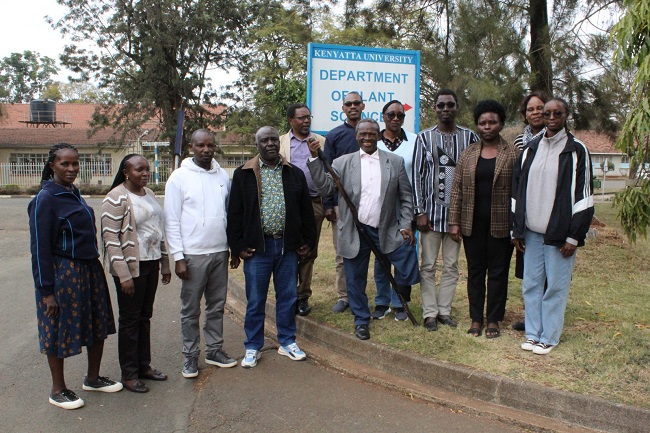
The meeting ended with an interactive main session where people asked questions and had discussions. After that Prof. Rebbecca Karanja from the Ecology and Conservation Section shared some steps that can be taken next. A formal thank you was given by Dr. Peterson Muchemi, which showed appreciation and set a start for more work together in the future.