
The future of indigenous languages will not be decided in archives. It will be shaped in digital spaces, classrooms and innovation hubs. This was the resounding message as Kenyatta University convened scholars, policymakers, cultural leaders, development partners and students to commemorate International Mother Language Day (IMLD) 2026 under the global theme “Youth in the Digital Frontier: Revitalising Indigenous Languages in a Multilingual World.”
Hosted at the University Amphitheatre, the celebration moved beyond symbolism to articulate a strategic agenda: positioning African languages at the centre of technological advancement, education reform, and inclusive development.
In her opening remarks, Prof. Catherine Ndugo, Lecturer in the Department of Kiswahili and African Languages, underscored the responsibility of institutions of higher learning to serve as custodians of linguistic heritage while simultaneously acting as laboratories of innovation. Universities, she noted, must not treat indigenous languages as relics of the past but as living systems capable of thriving within digital ecosystems.
Representing the Executive Dean of the School of Law, Arts and Social Sciences, Dr. Chacha reinforced this perspective by emphasising the urgency of embedding African languages within contemporary digital infrastructure. Without deliberate integration into digital platforms, educational technologies, and policy frameworks, linguistic communities risk marginalisation in an increasingly technology-driven global order.
Development partners echoed this call with practical commitments. Mr. Manasseh Wekundah, Country Director of SIL International, highlighted ongoing initiatives to document, digitise and standardise indigenous languages – work that ensures communities are not excluded from the knowledge economy. Goodwill messages from representatives of Kenya National Commission for UNESCO (KNATCOM), Bible Translation and Literacy (BTL) and the Kenya National Examinations Council (KNEC) reflected a shared institutional recognition: linguistic diversity is foundational to equitable education systems and sustainable national development.
Delivering the keynote address, Dr. David Njengere, MBS, CEO of the Kenya National Examinations Council, challenged young people to move from passive preservation to active innovation. He called upon youth to develop digital content, applications, and learning platforms in their mother tongues, transforming indigenous languages into vehicles of technological creativity rather than limiting them to ceremonial or cultural functions. His address reframed language revitalisation as both a cultural imperative and an economic opportunity.
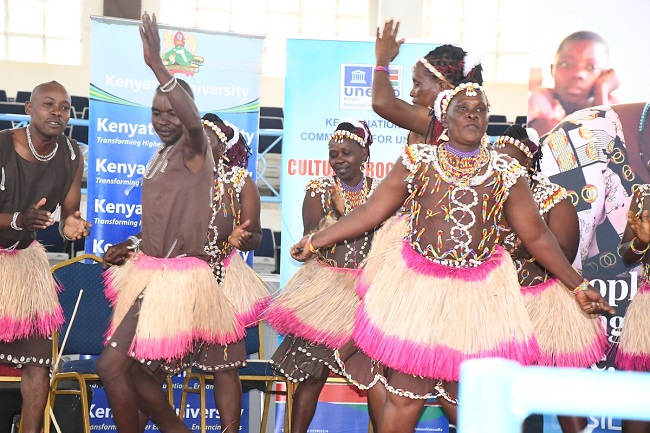
Cultural performances by Rapala Cultural Troupe, Tharaka cultural dancers, Ilchamus dancers and the Sangwa Amahoro drummers animated the celebrations, demonstrating that language and culture remain inseparable pillars of identity. These artistic expressions were not peripheral entertainment; they were living affirmations of Kenya’s linguistic plurality and resilience.
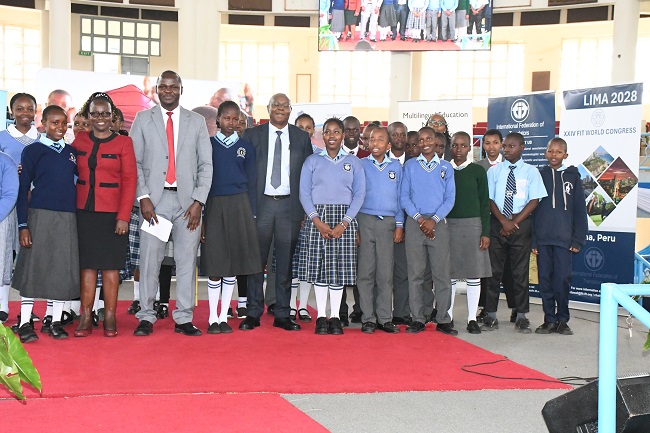
A particularly compelling dimension of the day was the active participation of young learners. Essay writing and audio-visual competitions drew contributions from primary school pupils, university students and members of Chama Cha Kiswahili Cha Kenyatta. Their presentations illustrated a generation increasingly aware that safeguarding mother tongues requires creativity, digital literacy, and cross-sector collaboration. Awards presented by partner institutions affirmed a collective commitment to nurturing youth as ambassadors of linguistic heritage.
As discussions unfolded in an engaging question-and-answer session moderated by Prof. Catherine Ndugo, a clear consensus emerged: revitalising indigenous languages in a multilingual world demands coordinated action across academia, policy, technology, and community spaces.
The 2026 International Mother Language Day celebrations at Kenyatta University therefore, served not only as a commemorative event but as a policy-relevant platform aligning cultural preservation with digital transformation. In an era defined by globalisation and rapid technological change, the University’s message resonated with clarity. Safeguarding mother tongues is not merely a cultural obligation; it is a strategic investment in identity, knowledge systems, innovation and inclusive development for generations to come.